Blog
Stainless Steel Fire Pits for Durable and Stylish Outdoor Fire Features

Quick answer: Stainless steel resists rust and does not need a separate protective finish, which is why it is a popular material for double-wall smokeless fire pits.
Carbon steel costs less, and its rust-coloured patina is the look some buyers want. For coastal or modern-style outdoor spaces, stainless steel is worth considering. For a large rustic backyard bowl, carbon steel may be the better fit.
What stainless actually buys you
Chromium in the alloy forms a self-healing oxide layer, so the steel resists the rust cycle that eventually perforates mild steel — important for anything that lives outside full-time and critical near salt air.
It also means no paint, no oil, no sanding: wipe it down and it looks new.
The trade-off is price; stainless costs more per kilo and is harder to form.
Why smokeless fire pits are stainless
A smokeless pit is an airflow machine — vents at the base, a sealed double wall, a ring of jets at the rim.
Rust anywhere in that path degrades the secondary burn. That’s why the Diablo smokeless fire pits are all-stainless, double-wall builds with a lifetime warranty: the material is what lets the maker offer it.
Both sizes — the 600mm for groups and the 500mm for patios and travel — include the grill, lid and carry bag.
Diablo Huge 600mm
The larger smokeless fire pit option for group gatherings, with an adjustable grill, lid and carry bag included.
Diablo 500mm
The smaller portable option for suitable outdoor locations, with an adjustable grill, lid and carry bag included.
When carbon steel is the smarter buy
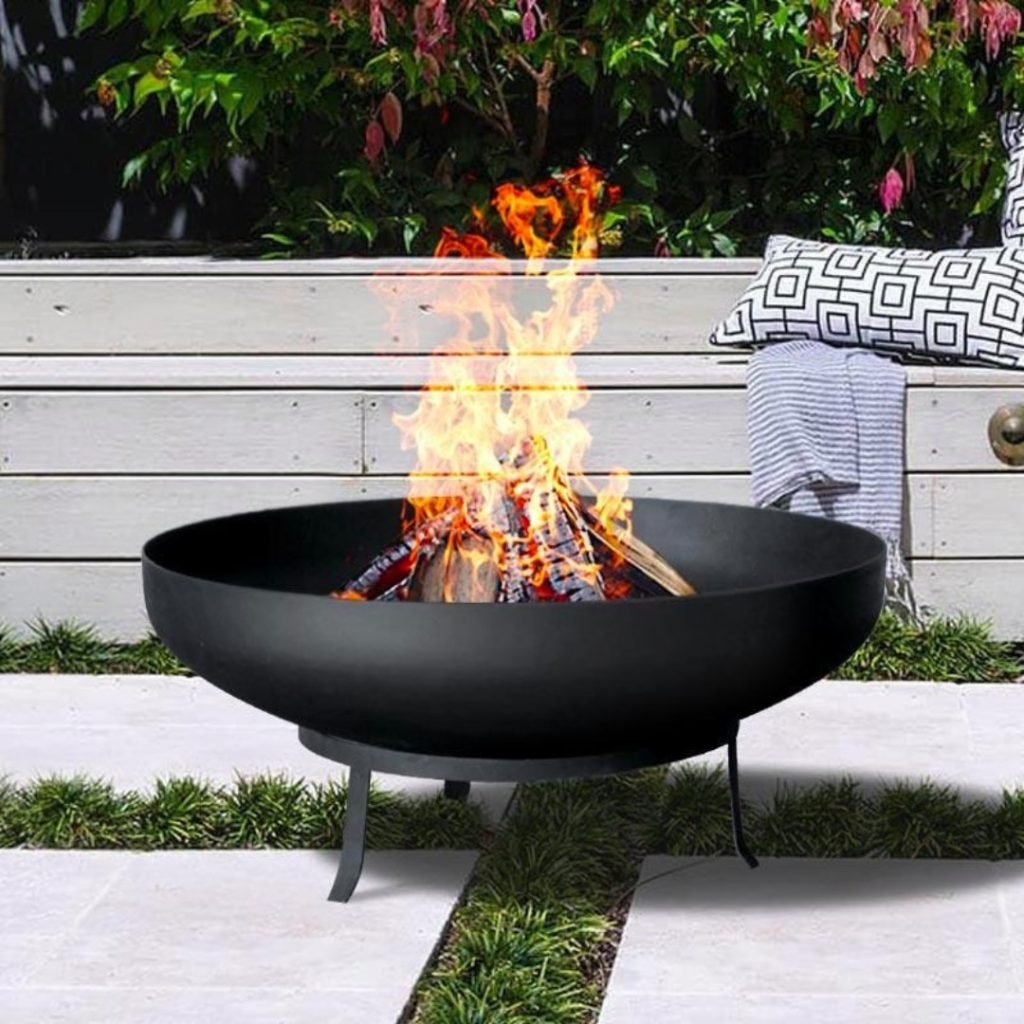
If you want a big open bowl and you like (or don’t mind) the weathered corten-style look, 3mm carbon steel gives you far more fire per dollar — an 800mm bowl costs less than a 500mm stainless smokeless pit.
The patina is self-protecting on thick steel; it’s a finish, not a fault.
The wood fire pit guide covers that side of the decision.
Material reminder: Check the specifications and care requirements for your exact fire pit model. A weathered carbon steel finish does not automatically mean certified Corten steel or zero maintenance.
Stainless steel vs carbon steel fire pits
| Feature | Stainless steel | Carbon steel |
|---|---|---|
| Appearance | Brushed, machined finish | Weathered rust-coloured patina |
| Corrosion resistance | Higher resistance to rust | Develops surface rust outdoors |
| Typical Diablo design | Double-wall smokeless pit | Traditional open fire bowl |
| Maintenance | Cleaning and inspection | Ash removal, drainage and care |
| Cost | Generally higher | Generally lower |
Care, in one paragraph
Stainless: empty cold ash, keep the lid on between fires, wash with warm soapy water when it dulls.
Tea-staining (light brown surface spotting near the coast) wipes off with a non-abrasive cleaner. That’s the entire maintenance schedule.
Before cleaning: Let the fire pit cool completely and follow the manufacturer's care instructions. Stainless steel can still discolour or develop corrosion in certain conditions.
Stainless steel fire pit FAQs
Do stainless steel fire pits discolour?
The area around the flame develops golden-blue heat tint — that’s normal and most owners like it. It’s cosmetic, not corrosion.
Stainless or carbon steel near the beach?
Stainless, without question. Salt air accelerates carbon steel’s patina from “finish” toward “flaking” over enough years; stainless shrugs it off.
Is a stainless fire pit worth the extra cost?
If you’re buying smokeless, you don’t have a choice — the design needs it. For an open bowl, it’s a looks-and-longevity call.
The stainless option, done properly
Explore Diablo smokeless fire pits — 500mm and 600mm, lifetime warranty.







3 thoughts on “Stainless Steel Fire Pits for Durable and Stylish Outdoor Fire Features”