Blog
Fire Pit Tables: Ethanol vs Gas

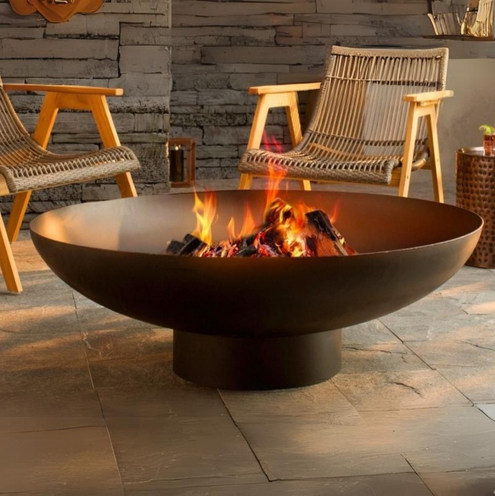
An ethanol fire pit table runs on liquid fuel poured into a burner, so it needs no gas line or cylinder and can sit almost anywhere the manufacturer allows. A gas fire pit table runs on an LPG cylinder or a natural gas connection, gives adjustable heat at the turn of a knob, and needs no refuelling mid-evening. Neither is exempt from fire restrictions or ventilation rules.
This guide compares ethanol and gas fire pit tables in terms of heat, installation, running costs, safety, and upkeep, and helps you decide which suits your outdoor area.
What Is a Fire Pit Table?
A fire pit table is a table with a fire pit built into its centre: a flat tabletop surrounding a burner that produces a real flame. It works as a coffee or lounge table and a fire feature in one. Most outdoor fire pit tables burn ethanol or gas rather than wood, so they produce no ash or wood smoke.
A fire pit table is still a fuel-burning appliance, not ordinary furniture. It produces heat and combustion gases and requires the clearances and ventilation specified in the manufacturer’s instructions. Keep drinks, plates and decorations clear of the burner area.
Ethanol vs Gas Fire Pit Tables at a Glance
The main difference between ethanol and gas fire pit tables lies in how the fuel reaches the flame. Ethanol is poured into a burner by hand and burns until it runs out or is snuffed. Gas flows from a cylinder or a fixed supply through a valve, allowing the flame to be turned up, down, or off instantly.
| Feature | Ethanol fire pit table | Gas fire pit table |
| Fuel | Liquid ethanol, as specified by the manufacturer | LPG cylinder or natural gas |
| Connection | None; self-contained burner | Cylinder and regulator, or a fixed bayonet point |
| Lighting and control | Lit by hand; flame size set by the burner | Ignition and control knob; adjustable flame |
| Refuelling | Only when the flame is out, and the burner is cool | Swap cylinders, or none on natural gas |
| Installation | No gasfitting | Natural gas connections need a licensed gasfitter |
| Placement flexibility | Can be moved; check clearances and ventilation | Limited by cylinder placement or gas point location |
| Smoke and ash | None from wood; follow ventilation instructions | None from wood; outdoor appliances must stay outdoors |
| Key safety focus | Refuelling and spills | Leaks and connections |
Which Gives More Heat?
Heat depends on the specific burner, not the fuel type alone. Gas fire pit tables usually let you adjust output with a control knob, and their heat rating appears on the appliance data plate. Ethanol tables produce real radiant warmth near the table, but their output is determined by the burner size and design.
To compare models fairly, ask each supplier for the burner’s rated output and fuel use. Treat either type as warmth for people seated around the table rather than heating for a whole patio. For broader coverage of a covered alfresco area, an infrared heater is ideal.
Installation and Setup Compared
An ethanol fire pit table requires no installation beyond positioning and fitting a windshield, while a gas table requires either a correctly connected LPG cylinder or a natural gas supply. Connecting to natural gas, or adding an outdoor gas point, is gasfitting work for a licensed professional.
Ethanol
Place the table on a level, stable surface, fit the windshield if supplied, and maintain the clearances specified in the instructions. Because there is no gas line, an ethanol table can be repositioned later, but every new location must still meet the manufacturer’s clearance and ventilation requirements.
Gas (LPG or natural gas)
An LPG table connects to a cylinder through a regulator, unless the appliance is designed otherwise. A natural gas table connects to a bayonet point or fixed supply. Energy Safe Victoria states that it is illegal for unlicensed people to carry out gasfitting work and that homeowners must always use a licensed or registered gasfitter. Each state and territory sets licensing rules, so check with your local gas regulator.
Running Costs and Fuel Supply
Running costs for both types depend on how quickly the burner consumes fuel and what you pay for it. Ethanol is bought in bottles and poured in by hand. LPG means swapping or refilling cylinders, while natural gas is billed through your gas account and doesn’t require refilling.
Ask for the fuel consumption rate before you buy, then multiply it by your local fuel price to estimate a cost per hour. For ethanol, use only the fuel type specified by the manufacturer and never substitute other flammable liquids; our guide to bioethanol fire pits explains the fuel. Burn time per fill depends on the burner’s capacity and flame setting, so check the product instructions rather than relying on a general rule. For gas, check how long a full cylinder lasts at the appliance’s rated consumption.
Safety, Placement and Fire Rules
Both fuel types are safe when used exactly as the manufacturer instructs, but their main risks differ. Ethanol’s biggest hazard is refuelling a burner that is still alight or warm. Gas’s main hazards are leaking connections and the use of an outdoor appliance in an enclosed space.
Ethanol refuelling
Ethanol burners have caused serious burn injuries in Australia. Since July 2017, decorative alcohol-fuelled devices sold here must meet a mandatory safety standard, which Product Safety Australia says includes a fuel container with a flame arrester or an automatic fuel pump, and a prescribed warning. Ethanol flames can be hard to see in daylight, so confirm the flame is out and the burner is cool before refuelling, wipe up spills, and store fuel away from the table.
Gas certification and leaks
Check that a gas fire pit table carries a gas certification label. For LPG, CFA advises not refilling a cylinder that hasn’t been tested in more than 10 years, or that is damaged, and checking that connections are tight. O-rings are in good condition; test for leaks by spraying soapy water on the connections and hoses. Close the cylinder valve when not in use.
Covered areas and balconies
A roofed alfresco is not automatically suitable for either type. Gas appliances certified for outdoor use must stay in an “outdoor area” as defined in the gas installation standard, AS/NZS 5601.1, which can exclude spaces enclosed on several sides; a licensed gasfitter can assess your area. Ethanol tables require the ventilation and overhead clearance specified by the manufacturer. On a balcony, check your strata or body corporate rules first, as some buildings ban open flames or gas cylinders.
Fire bans
In Victoria, CFA states it is illegal to use a fire pit, chimenea, brazier or any other solid-fuel fire anywhere in the state on a Total Fire Ban day. Ethanol and gas fire pit tables are not solid-fuel fires, but do not assume they are exempt: rules differ between states, territories and settings, so check your fire service before lighting either type on a declared ban day or during the fire danger period.
Maintenance and Everyday Use
Both types are low-maintenance compared with a wood-fired pit, with no ash to empty. Ethanol tables require the burner to be kept clean and the fuel handled carefully. Gas tables need connections checked regularly and, for fixed installations, periodic servicing by a gasfitter.
| Task | Ethanol | Gas |
| Before each use | Check the burner is empty or cool before filling | Check the hose and connections; leak-test after a cylinder change |
| After use | Snuff the flame as instructed; let the burner cool | Turn off at the control and the cylinder valve |
| Cleaning | Wipe the table once completely cool | Wipe the table and keep burner ports clear |
| Covering | Fit the cover only when fully cool | Cover when cool; protect the cylinder from weather |
| Servicing | Follow the manufacturer’s care instructions | Fixed gas appliances: service by a licensed gasfitter |
Ethanol or Gas: Which Fire Pit Table Suits You?
Choose ethanol if you want a self-contained table you can position freely, with no gas fitting. Choose gas if you want adjustable heat, push-button control and no mid-evening refuelling, and you have a suitable outdoor gas point or space for a cylinder.
| Your priority | Better fit |
| No gas line, no installation | Ethanol |
| Flexibility to rearrange the outdoor setting | Ethanol |
| Adjustable flame and instant on/off | Gas |
| Long evenings without refuelling | Gas (natural gas especially) |
| Renting, where gasfitting may need permission | Ethanol |
| Existing outdoor natural gas point | Gas |
For more on each fuel beyond tables, read our guides to ethanol fire pits and gas fire pits.
Ethanol Fire Pit Tables at Outdoor Living HQ
Outdoor Living HQ’s fire pit tables are ethanol models in four sizes: a 91cm square table and three rectangular tables at 127cm, 132cm and 140cm long. Choose by the shape and size of your lounge setting, then allow the operating clearances set out in each model’s instructions.
| Model | Size (L × W × H) | Shape | Suits |
| Compact Charm 91cm | 91 × 91 × 40cm | Square | Square or smaller lounge settings |
| 127cm ethanol fire pit table | 127 × 76 × 30cm | Rectangular, low; concrete-look finish; glass windshield and fabric cover included | Rectangular lounge settings |
| Modern Elegance 132cm | 132 × 70 × 35cm | Rectangular, low | Longer lounge settings |
| Sleek and Safe 140cm | 140 × 70 × 40cm | Rectangular | Large entertaining areas |
At the time of writing, the 91cm and 140cm tables are sold out. Check each product page for current availability, pricing and inclusions, or browse the full fire pit range.
Choosing Your Fire Pit Table
Ethanol suits buyers who want a self-contained fire pit table with no installation required and flexible placement options. Gas suits buyers who want adjustable heat and long, uninterrupted evenings, and who have a suitable gas supply. Whichever you choose, follow the manufacturer’s clearances and your local fire rules.
Ready to compare sizes? View the 127cm ethanol fire pit table, or contact the Outdoor Living HQ team for product documents and help choosing the right table for your space. Visit Outdoor Living HQ for the full range of outdoor living products.
Frequently Asked Questions
Can I use a fire pit table under a covered alfresco?
Only if the exact model and your space meet the manufacturer’s ventilation and clearance requirements and, for gas, the space qualifies as an outdoor area under AS/NZS 5601.1. A roof alone does not rule a space in or out. Check the instructions and, for gas, ask a licensed gasfitter.
Can I convert an ethanol fire pit table to gas?
No. Do not fit a gas burner into a table designed for ethanol, or modify any fuel-burning appliance yourself. Gas appliances must be certified as built, and a licensed professional must perform gasfitting work. If you want gas, buy a table designed and certified for it.
Can I use a fire pit table on a balcony?
Check your strata or body corporate rules first, as some buildings ban open flames or gas cylinders on balconies. If flames are allowed, the table still needs the manufacturer’s clearances from walls, ceilings and balustrades, and ethanol tables need careful refuelling well away from anything flammable.
How long does an ethanol fire pit table burn on one fill?
Burn time depends on the burner’s fuel capacity, its flame setting and wind conditions. A glass windshield helps the flame burn steadily outdoors. Check the product instructions or ask the supplier for the burner’s capacity and consumption rate rather than relying on a general estimate.
Can I use a fire pit table on a Total Fire Ban day?
Do not assume so. In Victoria, CFA bans fire pits and all other solid-fuel fires on Total Fire Ban days, and rules for ethanol and gas appliances vary by state and setting. Check your local fire service’s Total Fire Ban rules for your fuel type before lighting either table during fire season.