Blog
Portable Fire Pits for Camping and Patios

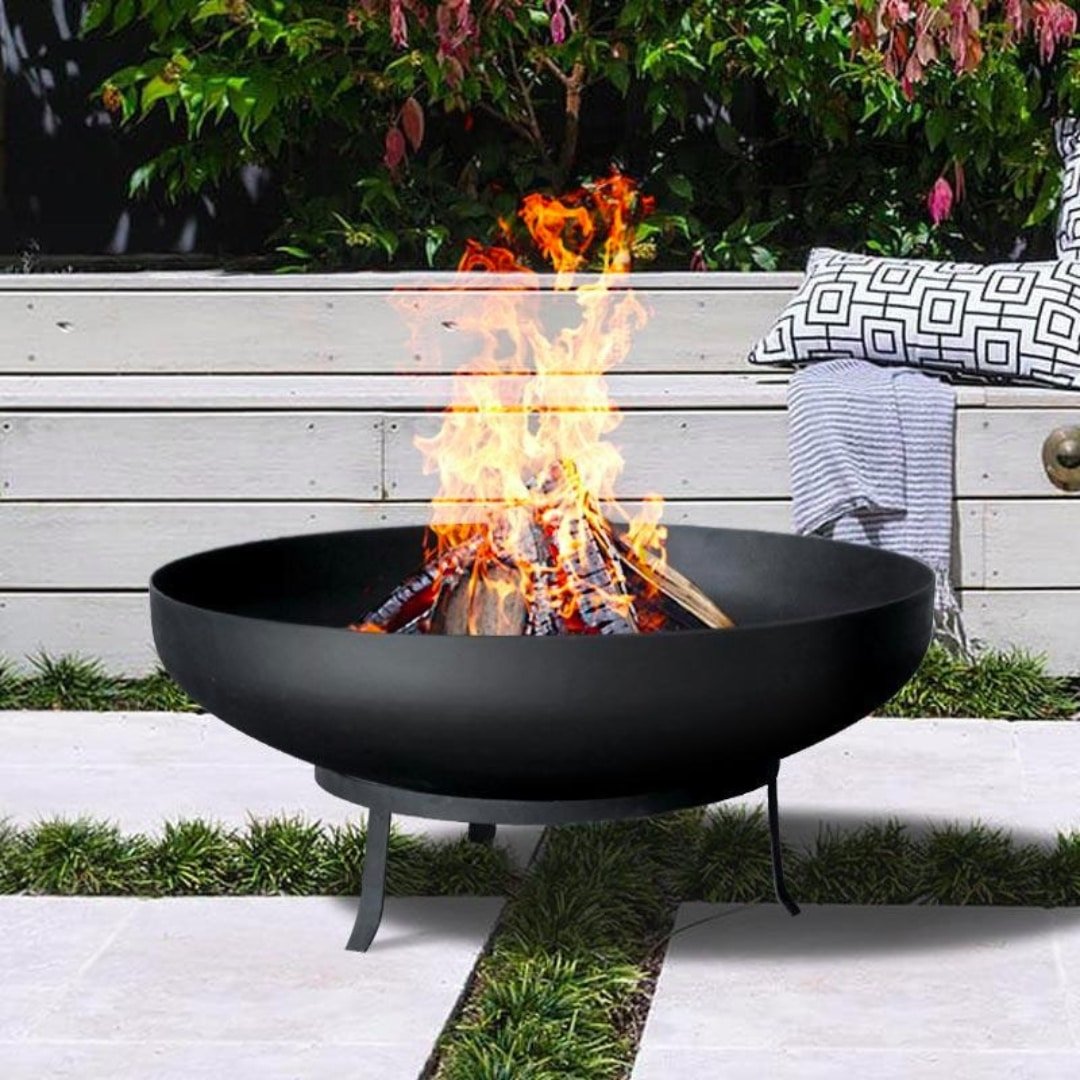
A good portable fire pit packs into a bag or has sturdy handles, is light enough for one or two people to lift into a car, and is built from steel that handles knocks and heat. For camping, check the land manager’s fire rules first: many parks only allow raised, contained fire pits, and open fires are banned on Total Fire Ban days.
This guide compares the main types of portable fire pits, explains what makes one genuinely easy to move, sets out the fire rules campers need to know, and covers how to use the same pit safely on a patio at home.
What Is a Portable Fire Pit?
A portable fire pit is a self-contained, movable fire pit designed to be carried from one location to another, such as from the backyard to a campsite. It holds the fire in a steel bowl, drum or cylinder, usually raised off the ground on legs or a base, and often comes with a carry bag, handles or a lid.
That makes it different from a fixed fire pit built into a patio, or a heavy decorative fire bowl that stays in one spot. For campers, the raised design matters as much as the weight: many campgrounds that ban ground fires still allow a contained fire pit or brazier.
Types of Portable Fire Pits Compared
Portable fire pits come in four main types: smokeless wood fire pits, open steel bowls or braziers, bioethanol burners and gas fire pits. Wood models give real warmth and a campfire feel; ethanol and gas models produce little or no wood smoke but need their own fuel and safety precautions.
| Type | Fuel | Smoke | Portability | Best suited to | Fire ban days |
| Smokeless wood fire pit (double wall) | Firewood | Reduced once the fire is hot | Compact sizes, often with a carry bag | Camping where wood fires are allowed; patios with close neighbours | Banned |
| Open steel bowl, brazier or fire drum | Firewood | More than a double-wall design | Varies; raised braziers are common at campgrounds | Campgrounds requiring raised fires; larger open spaces | Banned |
| Bioethanol burner | Liquid bioethanol | Little visible smoke | Limited: compliant devices weigh at least 8 kg | Patio ambience rather than camping | Do not assume it is exempt; check your fire service |
| Gas fire pit | LPG cylinder | No wood smoke | Needs a cylinder, hose and regulator | Patios and sites that allow gas appliances | Do not assume it is exempt; check your fire service |
If smoke is your main concern, read how smokeless fire pits work. For alcohol-fuelled patio options, see our guide to portable ethanol fire pits.
What Makes a Fire Pit Genuinely Portable?
Any fire pit can be carried once; a portable fire pit is one you will happily carry every trip. Four things decide that: a carry solution, a manageable weight and size, a shape that packs neatly, and materials that cope with being knocked around in a boot or trailer.
A carry solution
A fitted carry bag matters more than it sounds. A loose pit rattles in transit and leaves soot on everything around it. Check whether the bag or handles are included or sold separately.
Weight and size
Double-wall smokeless designs add steel, and steel adds weight. That is why compact smokeless pits tend to come in widths of around 500 to 600mm rather than the 800mm and larger sizes common for open backyard bowls. Check the listed weight and picture lifting it over the lip of your boot.
A shape that packs
Cylinders, drums and boxes stack neatly with other gear. Legs, grills, and lids should be packed inside or alongside the pit rather than travel as loose extras.
Durable materials
Stainless steel resists rust after rain, dew or a coastal campsite better than plain carbon steel, which develops a rust patina over time. Avoid painted finishes that can blister in heat and fragile parts that can bend in transit. Our guide to stainless steel fire pits covers the trade-offs.
How to Choose a Portable Fire Pit
To choose a portable fire pit, compare the burning chamber size, included accessories, steel used, and warranty, then check the listed dimensions against your car and your group. These details separate a pit you will use for years from one that stays in the shed.
| What to check | Why it matters | Question to ask |
| Burning chamber size | A small chamber needs constant feeding and limits log length | How long can the firewood pieces be? |
| Included accessories | A grill, lid and carry bag add cost if bought separately | Are the grill, lid and bag in the box? |
| Steel type | Affects rust resistance, weight and durability | Is it stainless steel, and what grade? |
| Warranty | Shows what the supplier will stand behind | How long is the warranty, and what does it cover? |
| Weight and packed size | Decides whether it fits your car and how often you take it | What is the listed weight and packed size? |
| Cooking options | A grill can replace a separate camp barbecue | Is a grill included, or is it available as an accessory? |
If you are weighing up a portable pit against a larger fixed one, see smokeless vs traditional fire pits.
Can You Take a Portable Fire Pit Camping?
Yes, where the campground, park or property allows fires and no fire ban applies. Rules are set by the land manager and your state fire service, and they change with the season. Some parks only allow fires in provided fireplaces, others require a raised portable fire pit, and open fires are banned on Total Fire Ban days.
Check the land manager’s rules first.
National parks, state forests, holiday parks and private campgrounds each set their own fire rules. At the time of writing, NSW National Parks says that Crowdy Gap campground in Crowdy Bay National Park does not allow ground fires, so campers who want a fire must bring a portable fire pit or brazier. Other parks permit fires only in the fireplaces they provide, and many holiday parks allow raised fire pits only in designated areas. Check the park’s alerts page or call the office before you pack.
Fire Danger Periods and Total Fire Bans
In Victoria, the CFA’s fire pit safety guidance says that during the Fire Danger Period you can only have an outdoor fire if:
- the wind is less than 10 km/h
- the area 3 metres around and above the fire pit is clear of anything that can burn
- someone is present at all times and able to put the fire out
- The fire is completely put out with water before you leave.
On Total Fire Ban days, CFA states it is illegal to use a fire pit, chiminea, brazier or any other solid-fuel fire anywhere in Victoria. In New South Wales, the NSW Rural Fire Service bans lighting fires in the open on Total Fire Ban days. Rules differ in other states and territories, so check your local fire service before every trip in the warmer months.
Campsite checklist
- Confirm the park allows your type of fire pit, and check the day’s fire danger rating.
- Set the pit on bare, level ground or a non-combustible surface, away from tents, vehicles and overhanging branches.
- Clear flammable material around and above the pit (at least 3 metres in Victoria during the Fire Danger Period).
- Keep water within reach and never leave the fire unattended.
- Burn only firewood you are allowed to bring or collect; many national parks restrict firewood collection.
- Put the fire out completely with water before you leave it or go to bed, and check the ashes are cool to the touch.
In a busy campground, a smokeless pit is the considerate choice: less smoke drifts into neighbouring sites. That matters for health as well as comfort, as Australian research in the Medical Journal of Australia links wood smoke from household heaters to premature deaths.
Using a Portable Fire Pit on a Patio or Balcony
A portable fire pit works well on a patio if it sits on a stable, non-combustible surface, in the open air, with plenty of clearance from walls, furniture and anything overhead. Wood fire pits are generally unsuitable for balconies, and apartment owners need to check strata or body corporate rules before using any flame.
For patio use:
- Place the pit on pavers, concrete or compacted gravel, not timber decking or synthetic turf, unless the manufacturer specifies a heat-resistant base.
- Never use a fire pit under a roof, pergola, awning or umbrella.
- Keep clear of fences, cushions, plants and the side of the house.
- Consider where smoke will drift: towards your windows or the neighbours’.
- The same Fire Danger Period and Total Fire Ban rules apply in the backyard as at a campsite.
If you are considering a bioethanol burner, check it meets Australia’s mandatory safety standard. Product Safety Australia says compliant devices must come with a fuel container with a flame arrester or an automatic fuel pump. It advises people with older tabletop devices to stop using them. Never refuel a burner while it is lit or still warm, as the flame can be hard to see. For a covered alfresco area where no flame is appropriate, an infrared heater is the safer option.
Portable Smokeless Fire Pits at Outdoor Living HQ
Outdoor Living HHQ’sportable wood-burning options are the Diablo 500mm and Diablo 600mm smokeless fire pits. Both use a double-wall design and come with a grill and a carry bag, allowing them to be moved between the patio and the campsite. The 500mm is the smaller, easier-to-carry model; the 600mm suits larger groups.
| Specification | Diablo 500mm | Diablo 600mm |
| Overall width | 500mm | 600mm |
| Total height | 460mm | See product page |
| Construction | Stainless steel, double wall | Double wall |
| Fuel | Wood | Wood |
| Included | Adjustable grill, lid, carry bag | Grill, carry bag |
Diablo smokeless fire pits ship free to metro areas Australia-wide, with local pickup from North Geelong. Check the product pages for current pricing, warranty terms and the full operating clearances in the manufacturer’s instructions, or browse the full smokeless fire pit range.
How to Transport and Store a Portable Fire Pit
Only pack a portable fire pit once the fire is fully out and the steel is completely cold. Empty and brush out the ash, wipe down the outside, then pack the pit and accessories into the carry bag. Store it somewhere dry; a lid or bag does not make a fire pit weatherproof.
- Put the fire out completely and wait until the pit is cold to the touch.
- Empty the ash into a metal container or a designated ash point at the campground.
- Brush out the chamber so the airflow vents stay clear for next time.
- Clean the grill separately once cool.
- Pack the pit, grill and lid into the carry bag, keeping sooty parts away from other gear.
- Store it dry between trips, following the manufacturer’s care instructions.
Choosing Your Portable Fire Pit
The best portable fire pit fits your car, your group and the places you camp. Choose a raised, contained design with a proper carry solution, check the park’s rules and the day’s fire danger rating before every trip, and use the same pit safely on the patio at home.
Ready to compare? View the Diablo 500mm portable smokeless fire pit, or contact the Outdoor Living HQ team for help choosing a size. Visit Outdoor Living HQ for the full range of outdoor living products.
Frequently Asked Questions
Can I use a portable fire pit in a national park?
Sometimes. Each park sets its own rules: some only allow fires in provided fireplaces, some require a raised portable fire pit or brazier, and some ban fires altogether in certain seasons. No fires are allowed in the open on Total Fire Ban days. Check the park’s alerts page or contact the park office before you go.
What size portable fire pit do I need?
It depends on your group, your car and how you cook. A pit around 500mm wide is easier to lift and pack, while a 600mm pit gives more room for a larger group and more cooking space. Check the listed dimensions against your boot space and the firewood lengths you can get.
Why are smokeless fire pits more expensive than open bowls?
A smokeless fire pit has two steel walls with engineered airflow vents between them, which add to material and manufacturing costs. An open carbon steel bowl is simpler to make, so that a larger open bowl can cost less than a smaller smokeless pit. The smokeless pit cuts smoke and travels well; the open bowl suits a permanent backyard spot.
Can I use a portable fire pit on a balcony?
Wood-burning fire pits are generally unsuitable for balconies because of embers, smoke and heat near the building, and many apartment buildings ban open flames. Check your strata or body corporate rules first. If a flame is allowed, any ethanol device must meet Australia’s mandatory safety standard; small tabletop burners do not.
Can I use a gas or ethanol fire pit on a Total Fire Ban day?
Do not assume so. In Victoria, CFA bans fire pits and all other solid-fuel fires on Total Fire Ban days, and rules for other fuels vary by state and setting. Check your state fire service’s Total Fire Ban rules for your fuel type and location before lighting anything.
=



4 thoughts on “Portable Fire Pits for Camping and Patios”