Blog
Ethanol Fire Pits for Clean-Burning Fires in Outdoor Spaces

Quick answer: An ethanol fire pit uses a burner designed for a specified alcohol fuel. It creates a real flame without wood or ash, but still requires careful installation and operation.
Use only the manufacturer-recommended fuel, follow the supplied refuelling instructions, and never refill an alight or hot burner.
Always check location, ventilation, clearance and local-rule requirements.
How an ethanol fire burns
Bioethanol is an alcohol-based fuel. Products sold under similar labels can differ, so use only the fuel recommended for the exact burner.
Combustion produces heat and gases; follow the appliance instructions for ventilation and operation.
Use the supplied controls and extinguishing method rather than assuming all burners operate in the same way.
Buying the fuel
You’ll see fuel sold as bioethanol fuel, ethanol fuel, bio fuel and alcohol fireplace fuel. Read the label carefully to confirm its composition and compatibility with the exact appliance.
The PDF identifies denatured ethanol products, often around 95–96% ethanol, as common fireplace fuels. However, fuel concentration and additives can vary, so the burner manufacturer's specified fuel takes priority over the label name or ethanol percentage.
Bioethanol fireplace fuel may be available from Australian hardware retailers in different bottle sizes.
Check the fuel specification
Use only the fuel type and formulation approved for your burner.
Check the pouring method
Follow the manufacturer's approved filling method and use only the recommended filling accessories.
Check storage guidance
Keep fuel sealed, upright and stored as the label and manufacturer require, away from heat and flames.
Avoid fuel substitutions
Methylated spirits and other alcohol-based products can contain different additives. Do not substitute them unless expressly approved for the exact burner.
The safety rules worth memorising
Never refill a warm burner. Vapour above warm ethanol can flash. Let the appliance cool completely according to the manufacturer's instructions before refuelling.
Follow the correct filling and lighting method. Fill only as instructed and use the manufacturer's specified ignition procedure. Never pour fuel into an alight burner.
Maintain the required clearances. Keep combustible items outside the specified area around and above the flame.
Confirm suitable ventilation. Ethanol combustion uses oxygen and produces gases. Only use the appliance in an approved location that meets its ventilation requirements.
Clean spills before ignition. If fuel spills, do not light the burner. Follow the manufacturer's spill-management instructions.
Important: Never refill an alight, hot or cooling ethanol burner. Always follow the exact appliance instructions, product warnings and current local requirements.
Ethanol vs wood: the honest comparison
Wood and ethanol are different choices, not interchangeable permissions.
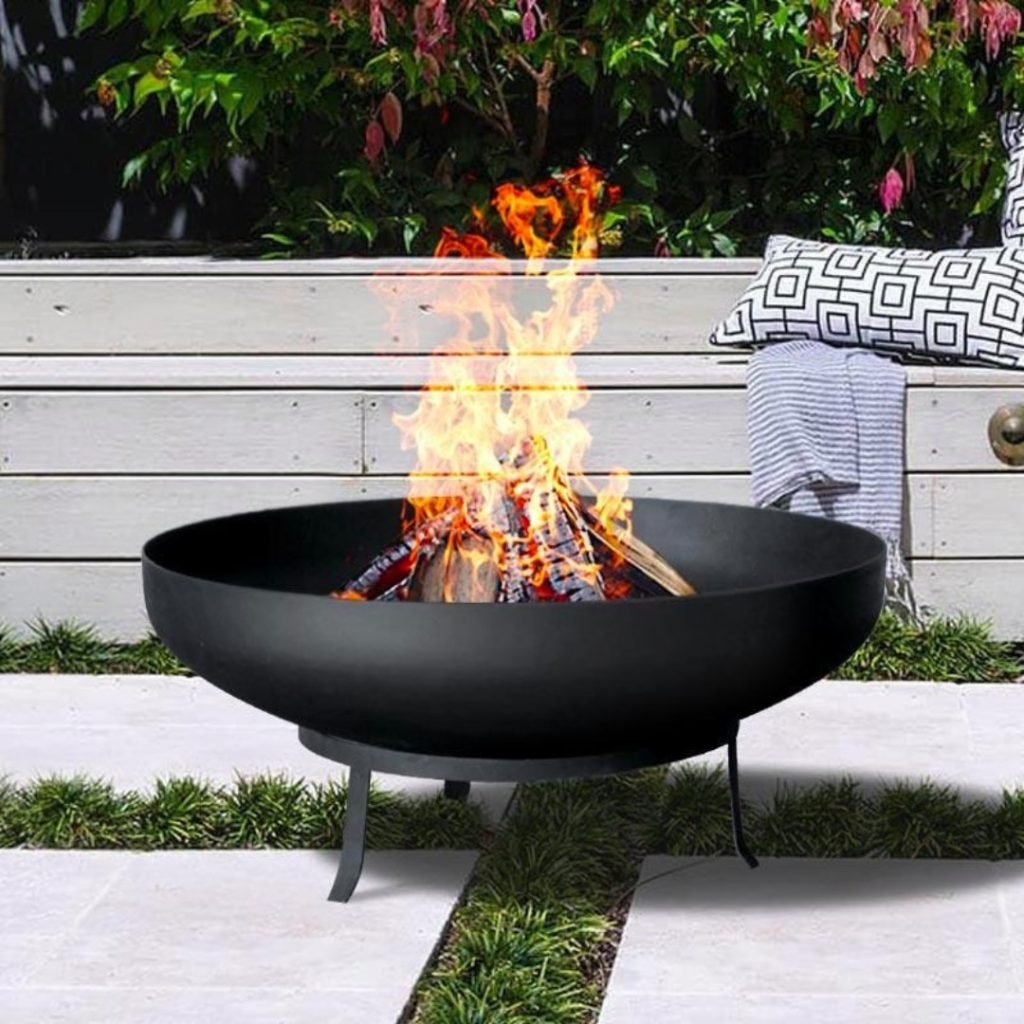
Wood gives a traditional fire with fuel and ash to manage; ethanol tables offer a burner in a table format.
Both require suitable installation and permission.
Compare the Diablo smokeless range and carbon steel fire pits with the Outdoor HQ tables, led by the 127cm ethanol fire pit table .
| Feature | Wood fire pit | Ethanol fire table |
|---|---|---|
| Fuel | Firewood | Approved bioethanol fuel |
| Flame | Wood-burning fire | Open burner flame |
| Ash | Wood ash to manage | No wood ash |
| Format | Fire bowl or chamber | Table-style flame feature |
| Installation | Manufacturer instructions and local fire rules | Manufacturer instructions, ventilation and local rules |
What about small portable ethanol burners?
Tabletop and travel-size ethanol burners exist — small decorative units you can carry.
We don’t sell them, and the honest note is that the smaller the burner, the shorter the burn and the more often you’re handling fuel, which is where ethanol risk concentrates.
For a portable real fire, a portable smokeless fire pit is the better tool; for a fixed smoke-free flame, a full-size fire table is safer and better value than a cluster of tabletop burners.
Location reminder: A portable wood fire is permitted only where the site rules and current fire restrictions allow it. A full-size ethanol table still requires an approved location and safe fuel handling.
Ethanol fire pit FAQs
Is bioethanol the same as ethanol?
For fire purposes, yes — “bio” flags the plant feedstock. Buy whichever label is cheapest at the right purity.
Does an ethanol fire smell?
Odour can vary with fuel, lighting, extinguishing and operating conditions. Use the specified fuel and ventilation. Do not describe a fuel-burning product as emission-free or rely on an absence of smell as proof of safe operation.
Can ethanol fire pits be used indoors?
Purpose-built indoor ethanol fireplaces exist, but our fire tables are outdoor products — use them outdoors or in well-ventilated covered outdoor areas.
How much does the fuel cost to run?
Expect a few dollars per hour of flame depending on bottle size and flame setting — more than wood per hour, less than most people guess, and zero cost in cleanup time.
Ready for the flame without the smoke?
Compare the four sizes in the ethanol fire table guide or go straight to the 127cm ethanol fire pit table .



One thought on “Ethanol Fire Pits for Clean-Burning Fires in Outdoor Spaces”