Blog
Modular Outdoor Kitchen Ideas for Australian Backyards

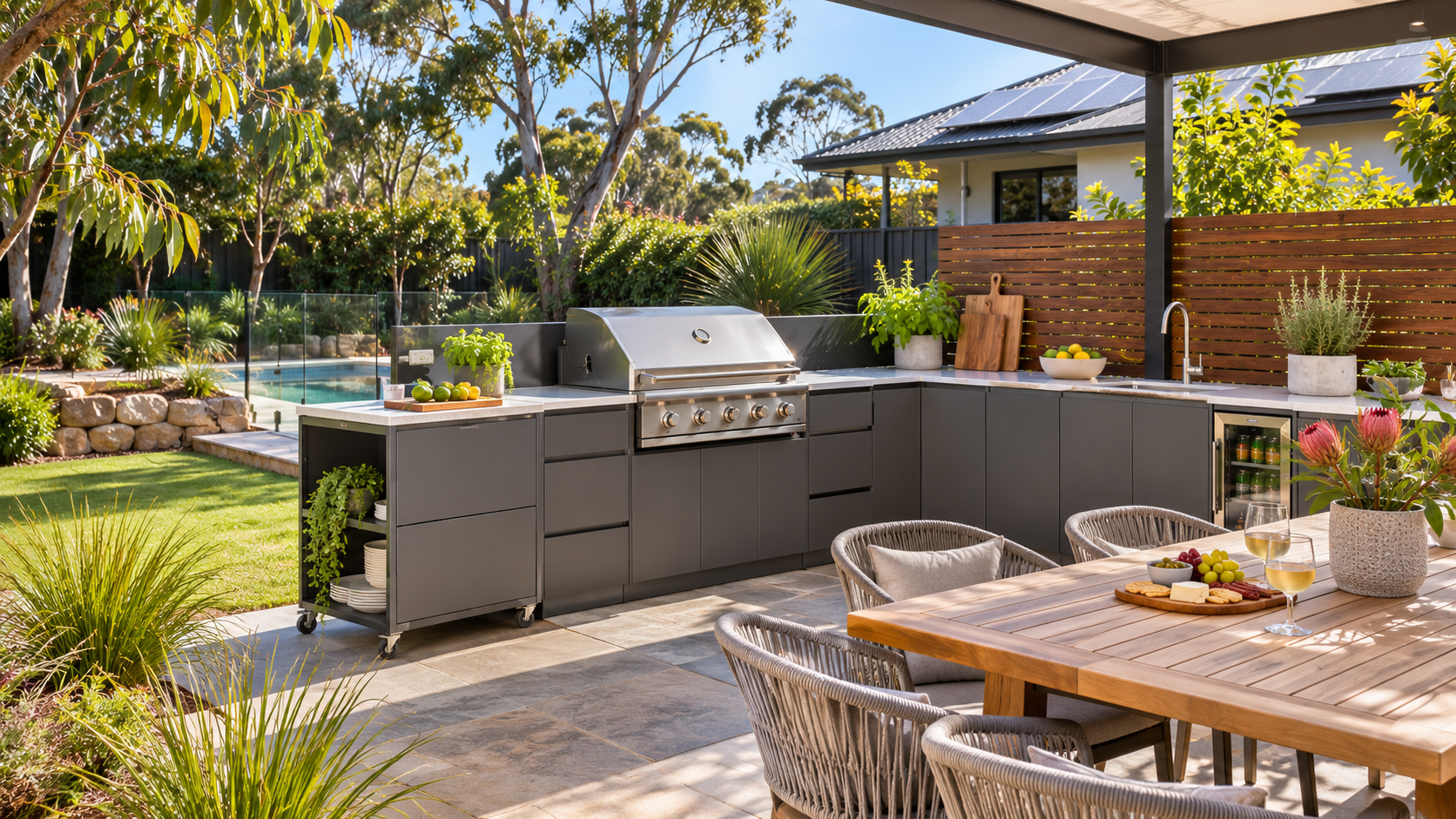
The best outdoor kitchen ideas start with your space and how you cook. Popular options include an all-in-one BBQ pod, a straight galley run against a fence, an L-shaped corner kitchen, an island with bar seating, and a pizza oven station. Modular units and pre-built pods make these layouts possible without a full custom build.
This guide shares ten outdoor kitchen ideas for Australian backyards, explains the difference between modular units, BBQ pods and custom-built kitchens, and covers the gas, water, power and permit checks to make before you start.
What Is a Modular Outdoor Kitchen?
A modular outdoor kitchen is built from separate, pre-made units, such as a BBQ module, a prep bench, a sink unit and storage, that are arranged to suit your space. A BBQ pod (or kitchen pod) goes further, bringing the cooking, sink, storage and lighting together in one pre-built, enclosed structure.
Both formats sit between a portable barbecue and a fully custom-built kitchen. They give you a defined cooking station with less on-site construction than masonry and custom joinery, though gas, water and power connections still need licensed trades.
10 Outdoor Kitchen Ideas for Australian Backyards
These ideas range from compact courtyard setups to full entertaining kitchens. Use them as starting points, then check your space, services and local rules.
1. The all-in-one BBQ pod
A BBQ pod packs the cooking, sink, storage and lighting into one enclosed unit that closes up when not in use. The Diablo Mini Outdoor Kitchen Pod is a 2.2m example, with a built-in 32-inch BBQ, a stainless steel sink with a pull-out faucet, refrigerator space, soft-close Blum drawers, an electric gate with remote and 24V LED lighting. The larger Diablo 3.5m Outdoor Kitchen Pod adds a 6-burner BBQ, a 108L outdoor fridge, a rangehood and a 46-inch TV. For what to compare between pods, see our BBQ pod buying guide.
2. The galley run along a fence or wall
A straight run of modules (BBQ, prep bench, then storage) against a fence, wall or boundary keeps the kitchen tucked to one side and leaves the yard open. It suits narrow side yards and long, thin courtyards. Leave clearance above the BBQ, as the instructions require, especially near timber fences.
3. The L-shaped corner kitchen
An L-shape puts the BBQ on one leg and prep or serving space on the other, so the cook can turn between tasks without walking. It works well in the corner of a patio, creating a natural boundary between cooking and lounging areas.
4. The island with bar seating
An island bench facing the yard lets the cook face guests rather than a wall. Add stools on the outside edge for drinks and casual meals. Islands need more floor space than a galley, so measure walkways around all sides first.
5. The pizza oven station
Pair the BBQ with a dedicated pizza oven on its own bench or stand. A gas oven heats up without the need to manage a wood fire, and in Victoria it can still be used on a Total Fire Ban day under CFA’s conditions, while a wood-fired oven cannot. Our guide compares wood-fired vs gas pizza ovens.
6. The compact courtyard setup
In a small courtyard, a single BBQ module with a bench beside it, plus a mobile trolley for serving, can do the work of a full kitchen. Keep a clear path back to the house for carrying food. Our guide to planning an outdoor kitchen layout for a small backyard covers spacing in detail.
7. The wet zone with a sink
A sink beside the prep bench saves trips inside for washing hands, rinsing produce and cleaning up. Plan the water supply and drainage before choosing a position, as connecting to mains water or a drain is plumbing work for a licensed plumber.
8. The covered outdoor kitchen
Placing the kitchen under a pergola or veranda adds shade and rain protection. Check two things first: whether the roofed structure needs a building permit, and whether the BBQ and other gas appliances are approved for that level of enclosure. Gas appliances certified for outdoor use must stay in a properly ventilated outdoor area.
9. The kitchen, dining and fire zone
Connect the kitchen to an outdoor dining table and, further out, a fire pit or lounge area. Each zone gets its own purpose, and guests can drift between them. Keep the fire pit well away from the kitchen and any gas cylinders; see our guide to fire pit types and design ideas.
10. The evening-ready kitchen
Built-in task lighting over the bench makes night cooking safer, and soft lighting around the dining area sets the mood. For cooler evenings under a covered area, an infrared heater adds warmth without an open flame near the seating.
Modular Units, BBQ Pods or Custom-Built?
Modular units offer the most layout flexibility, BBQ pods offer the most complete package in a single delivery, and custom-built kitchens offer full design freedom at the cost of the longest build time. The right choice depends on your space, budget, timeline and how much you want to change later.
| Factor | Modular units | BBQ pod | Custom-built |
| What it is | Separate pre-made units arranged to suit | One pre-built enclosed kitchen | Designed and built on site |
| Layout flexibility | High; units can be rearranged or added | Fixed footprint; choose size and finishes | Total, but fixed once built |
| On-site construction | Moderate | Low; position and connect | Highest |
| Services (gas, water, power) | Licensed trades needed | Licensed trades needed | Licensed trades needed |
| Delivery and access | Units moved separately | One large unit; check site access | Materials delivered over time |
| Best for | Evolving layouts | A complete kitchen with minimal design work | Unique spaces and premium designs |
Outdoor Living HQ sells two pre-built Diablo pods rather than separate modules. If you are weighing a premium bespoke kitchen, see luxury outdoor kitchen designs.
How to Plan Your Outdoor Kitchen
Plan an outdoor kitchen by deciding how you cook and entertain, measuring the space, including walkways, and then grouping the kitchen into zones for cooking, prep, washing, and serving. Confirm where gas, water and power will come from before choosing a final position.
- Work out your zones. Keep hot (BBQ, oven), wet (sink), cold (fridge) and dry (prep, storage) areas in a logical order.
- Measure everything. Include room to open doors and drawers, walk behind the cook and pull out chairs.
- Check access. A pre-built pod arrives as a single unit, so confirm the gates, side paths, and the delivery route. The Diablo Mini is 2200mm long, 2300mm high and 720mm deep at the base, with a 770mm top projection. Our site preparation and delivery guide explains what to check.
- Plan the services. Note the distance to the gas supply, a water point, a drain and a power outlet.
- Think about weather. Consider sun, prevailing wind and where rain runs off.
- Match the house. Choose finishes that suit the home and garden.
Gas, Water, Power and Permits
Modular and pod kitchens reduce on-site building work, but they do not remove the need for licensed trades or permits. Licensed professionals must complete gas, water, and electrical connections, and roofed structures over the kitchen may require a building permit.
- Gas: Energy Safe Victoria states it is illegal for unlicensed people to carry out gasfitting work. Use a licensed gasfitter for fixed gas connections.
- Water and drainage: Victoria’s Building and Plumbing Commission advises engaging a licensed or registered plumber for plumbing work, including connecting a sink to mains water or a drain.
- Power: Use a licensed electrician for new outdoor circuits, lighting or weatherproof outlets.
- Permits: In Victoria, the Building and Plumbing Commission says an unroofed pergola does not require a building permit if it meets height, size, and siting conditions, whereas decks do. Check with your council for roofed structures, planning overlays and local rules.
- Fire bans: On a Total Fire Ban day in Victoria, CFA allows gas and electric outdoor cookers only under its Fire Danger Period rules plus an extra condition. Solid-fuel cookers, including wood-fired pizza ovens and smokers, are banned.
Rules vary by state and territory, so confirm requirements with your local council and licensing body.
Caring for an Outdoor Kitchen
A simple routine keeps an outdoor kitchen looking good and working safely:
- Clean the BBQ, benches, and sink after use to prevent grease and food residue from building up.
- Wipe stainless steel with a suitable cleaner, especially near the coast.
- Seal stone or timber surfaces as the manufacturer recommends.
- Keep the kitchen closed or covered between uses.
- Have gas connections, plumbing, and electrical fittings checked if you notice any leaks, odours, or faults.
- Inspect burners and seals before the main entertaining season.
Bring Your Outdoor Kitchen Idea to Life
Pick the idea that suits how you cook and entertain, measure your space and delivery route, and plan the services with licensed trades before you buy. If an all-in-one setup appeals, compare the Diablo outdoor kitchen pods, or visit Outdoor Living HQ and contact the team for specifications and a delivery quote.
Frequently Asked Questions
What is the difference between a BBQ pod and a modular outdoor kitchen?
A modular outdoor kitchen is made of separate units arranged to suit your space so that you can add or rearrange pieces later. A BBQ pod is a pre-built, enclosed unit that combines the BBQ, sink, storage, and lighting within a fixed footprint. Pods involve less design work; modular units offer more layout flexibility.
Do I need council approval for an outdoor kitchen?
It depends on your state, council and what you build. A freestanding kitchen on existing paving may not require a building permit, but a new veranda, deck, or other roofed structure often does, and planning overlays can add requirements. Check with your council before ordering or building.
Can I put an outdoor kitchen under a pergola?
Often yes, but confirm the BBQ and other gas appliances are approved for that location and that the space has adequate ventilation. Unroofed pergolas generally offer more airflow than solid-roofed verandas. Follow the appliance instructions and ask a licensed gasfitter if unsure.
How much space do I need for an outdoor kitchen?
It depends on the layout. Allow for the kitchen’s footprint, plus room to open doors and drawers, and to walk behind the cook. As a reference, the Diablo Mini pod is 2.2m long, and the larger Diablo pod is 3.5m long; a galley or island layout needs extra space for walkways and seating.
How do I get a BBQ pod into my backyard?
A pre-built pod is delivered as a single unit, so check that gates, side paths, and turning points can accommodate it before ordering. Measure the narrowest point along the route and share the measurement with the supplier. Outdoor Living HQ quotes pod delivery separately based on your location and access, and local pickup is available from North Geelong.




One thought on “Modular Outdoor Kitchen Ideas for Australian Backyards”