Blog
Smokeless Fire Pit vs Traditional Fire Pit: What’s the Difference?

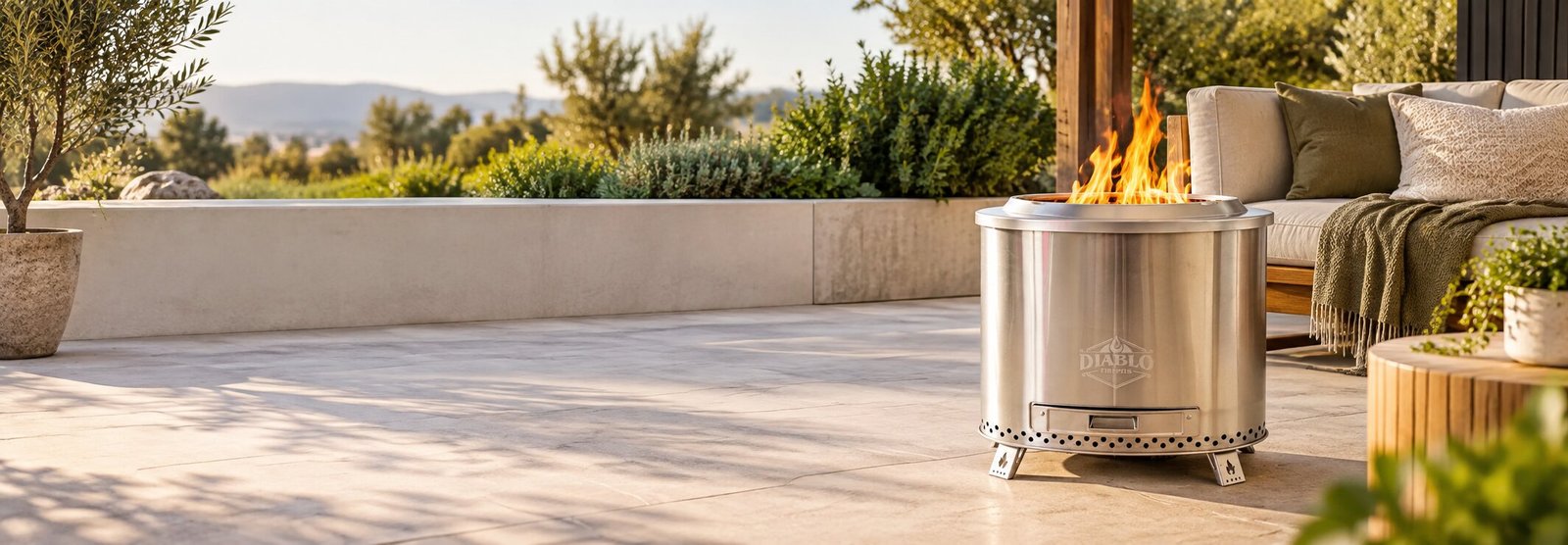
The main difference in the smokeless fire pit vs. traditional fire pit debate is how each one handles air and Smoke. A smokeless fire pit uses a double-wall design to feed heated air back into the flames, burning off much of the Smoke before it reaches you. A traditional fire pit is an open bowl or ring that burns wood with natural airflow, so it usually makes more Smoke but gives a classic campfire feel. This guide compares how they work, heat, fuel, costs, maintenance, safety and Australian fire rules.
What Is a Smokeless Fire Pit and How Does It Work?
A smokeless fire pit is a double-walled fire pit designed to reduce smoke by improving airflow. Air enters through vents near the base, warms as it rises between the walls, then flows out through holes near the top rim. This hot air helps burn off smoke and gases that would otherwise drift out of the Fire.
How the process works:
- Primary burn: air enters at the base, feeding the fire from below.
- Air heating: more air travels up between the inner and outer walls, where it warms.
- Secondary burn: heated air exits near the top, helping burn smoke particles and gases above the fire.
- RFiret: a cleaner, hotter flame with less smoke and less leftover ash.
Our Diablo Smokeless Fire Pit 500mm is made from stainless steel with a double-walled, airflow-optimised design and comes with an adjustable grill, lid, and carry bag. For a larger group, the Diablo Huge Smokeless Fire Pit 600mm comes with a grill and a carry bag.
What Is a Traditional Fire Pit?
A traditional fire pit is an open bowl, dish or ring that holds a wood fire. Air reaches the fire naturally from above and around the sides, so the burn is less controlled than in a smokeless design. Traditional fire pits often have a wider, more open flame and suit people who want a classic campfire look and feel.
Common traditional fire pit styles include:
- Steel fire bowls: wide, open dishes on a base.
- Weathering steel pits: develop a rust-coloured patina over time.
- Fire rings: simple open rings that sit on the ground or on pavers.
- Fire pits with cooking grills: an open fire with a grill over the top.
Our Diablo carbon steel fire pits are made from 3mm-thick weathering steel, which develops a natural rust patina when exposed to the elements. They come in a range of sizes, from 800mm up to 1200mm across, and matching grill accessories are sold separately.
Smokeless Fire Pit vs Traditional Fire Pit: Key Differences
The key differences between a smokeless fire pit and a traditional fire pit are smoke, airflow, ash, portability, and the look of the fire. Smokeless pits make less smoke and burn wood more completely. Traditional pits give a larger, open campfire-style flame and often suit larger gatherings.
| Feature | Smokeless fire pit | Traditional fire pit |
| Design | Double wall with airflow vents | Open bowl, dish or ring |
| Smoke | Reduced, especially once hot | More smoke, especially with damp wood |
| Burn | Hotter, more complete | Slower, less complete |
| Ash | Less left over | More ash |
| Flame look | Taller, cleaner flame within the pit | Wide, open campfire flame |
| Portability | Often compact; some include a carry bag | Larger bowls are heavier and stay in place |
| Cooking | Some include a grill | Many accept a grill accessory |
| Best for | Smaller yards, close neighbours, people sensitive to smoke | Larger yards and classic campfire style |
For a broader comparison that also covers ethanol fire pits, read our guide to choosing between ethanol, steel or smokeless fire pits.
Smoke Production, Heat Output and Burning Efficiency Compared
Smokeless fire pits produce less smoke and burn wood more efficiently than traditional fire pits, because the secondary burn uses heated air to burn off smoke. Traditional fire pits emit more smoke but often spread warmth more widely because of their open, low flame. Actual heat depends on the pit’s size, the wood, and how you build the fire.
Smoke:
- Smokeless pits make the most noticeable difference once the fire is hotand the secondary burn is working.
- Both types smoke more when you first light them and when you add damp wood.
Heat output:
- Smokeless pits often focus heat upward from a tall, hot flame.
- Traditional open bowls can spread warmth outward to people sitting around them.
- A larger pit and more wood generally give more heat in either design.
Burning efficiency:
- Smokeless pits burn wood more completely, which leaves less ash.
- Traditional pits burn more slowly and leave more unburnt material and ash.
Tip: whichever pit you choose, use dry, seasoned firewood. Wet or green wood is the biggest cause of smoke in any fire pit.
Fuel Types, Running Costs and Maintenance Requirements
Both smokeless and traditional wood fire pits burn firewood. Smokeless pits often use wood more efficiently, so you may need less per session, while traditional pits can use larger logs in a wider bowl. Running costs depend on local firewood prices and how often you use the pit. Maintenance mainly involves ash removal, cleaning, and weather protection.
| Factor | Smokeless fire pit | Traditional fire pit |
| Fuel | Dry, seasoned firewood (check the manufacturer’s instructions) | Dry, seasoned firewood |
| Log size | Smaller pieces suit compact pits | Larger logs fit wider bowls |
| Wood use | Often burns wood more completely | Burns more slowly; more leftover material |
| Ash cleaning | Less ash | More ash |
| Material care | Stainless steel: wipe clean when cool | Weathering steel: patina forms naturally |
| Weather protection | Lid or cover helps | Drainage helps; cover if possible |
Maintenance checklist:
- [ ] Let the pit cool completely before cleaning.
- [ ] Remove ash after each use.
- [ ] Keep the airflow vents clear on a smokeless pit.
- [ ] Use a lid or cover between uses.
- [ ] Store firewood dry and off the ground.
- [ ] Check for damage or wear before each use.
Our weathering steel pits include a drain hole that helps water drain after rain.
Safety, Placement and Local Fire Regulations in Australia
Use any fire pit on a flat, non-combustible surface in an open area, away from the house, fences, trees and anything that can burn. Always supervise the fire and keep Water nearby. Fire pit rules differ across Australia, and fire pits are banned on Total Fire Ban days.
Placement and safety checklist:
- [ ] Flat, stable surface that will not catch fire, such as pavers or concrete.
- [ ] Clear of the house, fences, overhanging branches, outdoor furniture and plants.
- [ ] Away from where smoke will drift into windows or neineighbours’rds.
- [ ] Water nearby to put the fire out.
- [ ] An adult present at all times while the fire is Fireing.
- [ ] Children and pets kept at a safe distance.
- [ ] Fire out before you leave it.
Fire rules by state.
- Victoria: CFA’s Can I or Can’t I guide says fire pits, chimineas and braziers follow the same rules as campfires during the Fire Danger Period, and that lighting them is banned on Total Fire Ban days. It also says to always be present while a fire pit is burning and that Water is the best way to put one out.
- New South Wales: the NSW RFS Total Fire Ban rules say you cannot light, maintain or use a fire in the open during a Total Fire Ban. The NSW EPA’s guide to open burning says you are only allowed to light a fire outside in certain situations, and to check what fires are allowed in your area.
- Other states and territories: check your local fire service and council before you light a fire.
A smokeless design reduces smoke, but it is still an open wood fire, so the same rules apply.
Which Fire Pit Is Best for Your Australian Backyard?
Choose a smokeless fire pit if you have a smaller yard, close neighbours or people who dislike smoke, or if you want something portable. Choose a traditional fire pit if you want a wide, open campfire flame, have a larger yard and enjoy the look of weathering steel.
Buying considerations:
- [ ] Space: how much room do you have, and how close are neighbours?
- [ ] Smoke: does smoke bother your household or neighbours?
- [ ] Group size: how many people will sit around the fire?
- [ ] Portability: do you want to move it or take it camping?
- [ ] Cooking: do you want a grill included or as an add-on?
- [ ] Look: do you prefer stainless steel or a rusted patina?
- [ ] Fire rules: how often do fire restrictions apply where you live?
- [ ] Alternatives: would an ethanol fire pit table or an infrared heater suit your spaSpacetter?
| If you want… | Best choice |
| Less smoke near the house | Smokeless |
| A portable pit with a carry bag | Smokeless |
| A wide, classic campfire flame | Traditional |
| A statement piece with natural patina | Traditional weathering steel |
| Less ash to clean | Smokeless |
For portable options, see our guide to portable smokeless fire pits for patios and camping. If wood fires are not practical where you live, compare electric and bioethanol fire pits, or browse our infrared heaters.
Frequently Asked Questions
Are smokeless fire pits completely smoke-free?
No. Smokeless fire pits reduce smoke but do not Smokee it entirely. You will usually see some smoke when lighting the fire, when burningwood and if the wood is damp. Once the pit is hot and the secondary burn is working, smoke drops noticSmoke.
Do smokeless fire pits produce as much heat as traditional fire pits?
They can produce a lot of heat, but it feels different. Smokeless pits burn hot and send heat upward from a tall flame. Traditional open bowls often spread warmth outward more widely. Size, wood and fire-building have the biggest effect on heat.
Can you use regular firewood in a smokeless fire pit?
Generally, yes. Smokeless fire pits are designed to burn firewood, and dry, seasoned wood works best. Cut logs to fit the pit without blocking the airflow vents. Always check the manufacturer’s instructions for recommended fuel.
Are smokeless fire pits worth the extra cost?
They are worth it if smoke is a concern for you, your family or your neighbours, or if you want a compact, portable pit. Prices vary by size and brand, so compare current prices. A traditional pit may suit you better if you prefer a wide, open flame.
Can you use a fire pit in your backyard in Australia?
Often, yes, but rules vary by state and council. Fire pits are banned on Total Fire Ban days, and restrictions may apply during fire danger periods. Check your state fire service and local council before lighting a fire in your backyard.
Pick the Right Fire Pit for Your Space
In the smokeless fire pit vs traditional fire pit comparison, smokeless pits win for reduced smoke, less ash, Smokeortability. In contrast, le traditional pits win for open campfire character and the look of weathering steel. Use dry wood, place the pit safely and check local fire rules before every season.
Browse our range of smokeless fire pits, or contact us if you have questions about sizes.