Blog
How Do Smokeless Fire Pits Work?

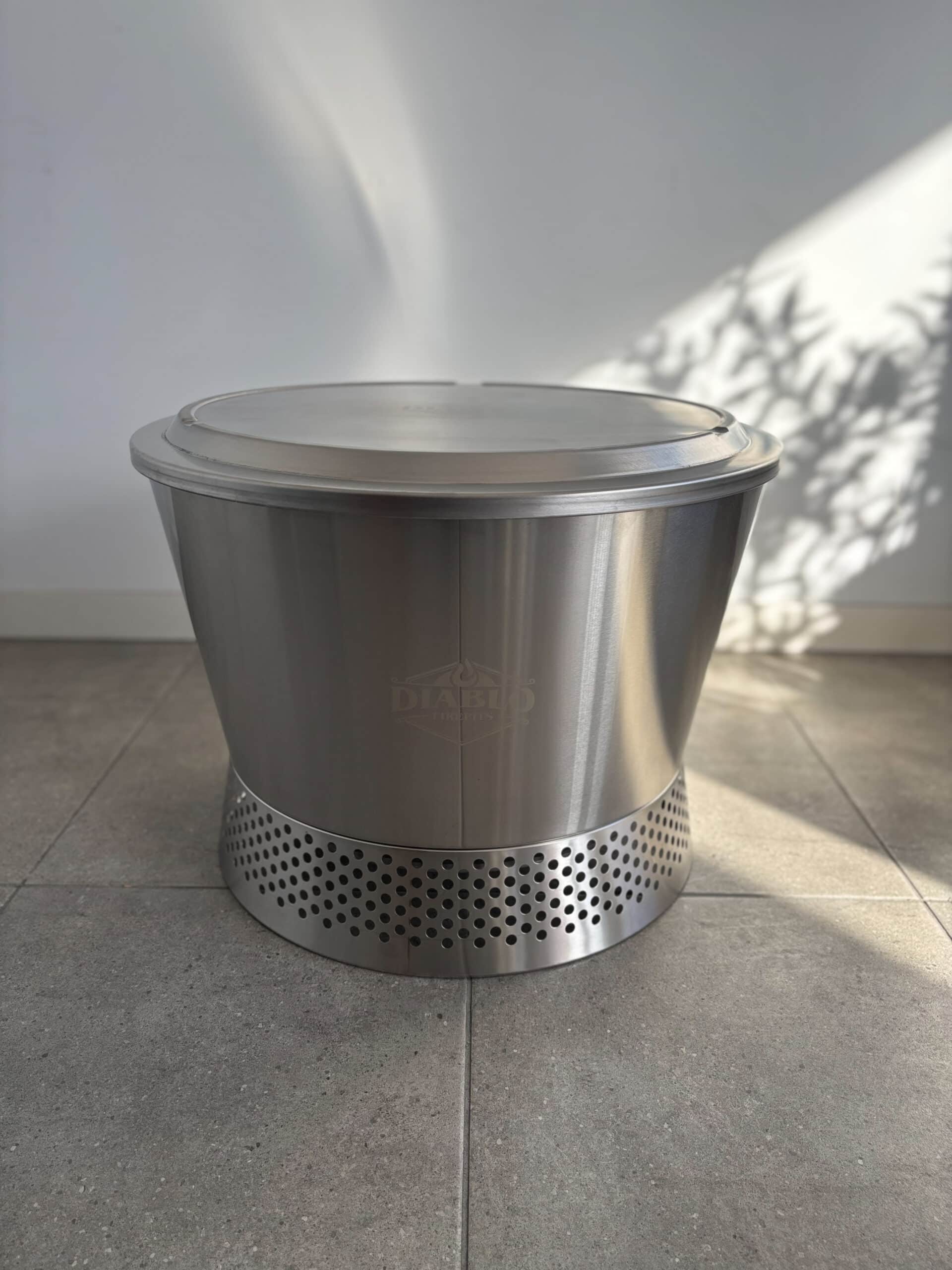
Smokeless fire pits work by burning the fire twice. A double-walled steel body draws air in through vents at the base, heats it as it rises between the walls, and releases it through holes near the rim. The hot, oxygen-rich air ignites gases and fine particles that would otherwise drift out as smoke, so much less smoke leaves the pit.
This guide explains the airflow design step by step, what independent testing shows about whether smokeless fire pits really work, why they sometimes still smoke, and the fire rules to check before you light one in an Australian backyard.
Key Takeaways
- Smokeless fire pits use a double wall and two sets of vents to create a secondary burn at the rim.
- Laboratory testing by the USDA Forest Service found low-smoke fire pits produced about 80% less fine particle pollution per kilogram of wood than a standard US emissions estimate for traditional fire pits.
- “Smokeless” means reduced smoke, not zero smoke. Lighting, damp wood, overloading, and wind all increase the risk of smoke.
- Firewood with less than 20% moisture content gives the cleanest burn.
- A smokeless fire pit is still an open wood fire, so Total Fire Ban and Fire Danger Period rules apply.
What Is a Smokeless Fire Pit?
A smokeless fire pit is a wood-burning fire pit with a double-walled body and engineered vents that create a second burn above the fire. The design reduces visible smoke once the fire is hot. “Smokeless” is a marketing description rather than a technical standard, so these pits produce less smoke than an open fire bowl, but never none at all.
Most wood-burning smokeless fire pits are steel cylinders, barrels, or boxes, ranging from compact, portable units to larger backyard models. Many come with a grill, lid or carry bag, such as the square Diablo Smokeless Fire Pit 500mm.
Gas, bioethanol and electric fire features are sometimes grouped with smokeless fire pits because they produce little or no wood smoke. They operate differently, with no secondary combustion of wood gases, so this guide covers only wood-burning models.
How Do Smokeless Fire Pits Work?
Smokeless fire pits work by supplying air to the fire in two places. Air enters low vents to feed the burning wood, while more air travels up the gap between the inner and outer walls, heats up, and jets out of holes near the rim. That second supply of hot air burns off smoke-forming gases before they escape.
Why ordinary fires smoke
When wood heats up, it releases flammable gases and tar droplets before it burns. In a fire with plenty of oxygen, those gases ignite and become flame. In a cooler fire, or one starved of air, they escape unburnt and cool into the grey-white haze we see as smoke. A smokeless fire pit is designed to give those escaping gases a second chance to burn.
Step 1: Primary air feeds the fire from below
Vents around the base let air flow under and into the fuel bed, usually through a raised grate. This primary air feeds the burning wood and helps the fire get hot quickly, which shortens the smoky smouldering stage.
Step 2: The double wall heats incoming air
Some of the air entering the base does not go into the fire. It travels up the cavity between the inner and outer walls instead. The fire heats the inner wall, so this air warms as it rises.
Step 3: Secondary combustion burns off smoke at the rim
The heated air exits through a ring of holes near the top of the inner wall, directly above the fire. It meets rising gases that still contain unburnt fuel and supplies fresh oxygen at high temperature, so those gases ignite. This is the secondary burn, the step that removes most of the visible smoke.
Step 4: The draught keeps the cycle going
Hot gases rising from the pit draw cooler air in through the base vents, much like a chimney. The hotter the fire, the stronger this draught becomes, which is why smokeless fire pits perform best once they are fully alight.
| Part | What it does | What it means for you |
| Base vents | Let primary air into the fire | Keep them clear of ash and debris |
| Raised grate | Lets air reach the wood from below | Burns hotter, with less smouldering |
| Double wall | Channels and heats secondary air | Pit exterior gets very hot; keep clearance |
| Rim vent holes | Release hot secondary air above the fire | Keep wood below this line |
| Open top | Lets the draught pull air through | Remove the lid before lighting |
Do Smokeless Fire Pits Really Work?
Yes, with conditions. In laboratory testing, the USDA Forest Service found that the fire pits it tested averaged 2.2 grams of fine particles per kilogram of wood, about 80% lower than the figure used in the US national emissions inventory for traditional fire pits and fire rings. Results depended on dry firewood and following the manufacturers’ instructions.
The study was conducted at the Missoula Fire Sciences Laboratory in collaboration with the Minnesota Pollution Control Agency. Three caveats are worth knowing:
- Shape matters, not only the label. The tested pits included two low-smoke models and a barrel-style campground pit, and the results were grouped. Enclosed, well-ventilated designs appear to be what counts.
- The 80% is a comparison with an estimate. It compares the test results to an inventory figure, not to a side-by-side open-fire bowl.
- It was a US study. It used US hardwoods; Australian timber and conditions were not tested.
Independent product testing reaches the same conclusion. Consumer Reports found that none of the smokeless fire pits it tested produced a truly smokeless fire; they smoke less than a conventional one.
In practice, a well-designed smokeless fire pit can produce far less smoke than an open bowl or ring, but how you burn matters as much as what you buy. Wet wood or an overloaded pit will smoke in any design.
Why Does a Smokeless Fire Pit Still Smoke?
A smokeless fire pit still smokes when the secondary burn is not working. The usual causes are a fire that has not yet heated up, damp or green wood, wood stacked above the rim vents, blocked base vents, or strong wind. Most can be fixed by changing the fuel or how the fire is loaded.
| Situation | Why it smokes | What to do |
| Just lit | Walls and air are still cool, so there is no secondary burn yet | Start with kindling and small dry pieces; add larger wood once flames are strong |
| Damp or green wood | Energy goes into boiling off water, keeping the fire cool | Use seasoned wood under 20% moisture; store it dry |
| Overloaded pit | Wood above the rim holes blocks secondary air | Keep the fuel below the vent line |
| Ash build-up | Blocked base vents starve the fire of air | Empty cold ash before each use |
| Strong or gusty wind | Disrupts the draught and the secondary air | Use a sheltered spot, or skip the fire on very windy days |
| Leaves, rubbish or treated timber | Burns poorly and can release toxic fumes | Burn only clean, untreated firewood |
| Fire dying down | Temperature drops and the secondary burn fades | Add a few pieces before the fire gets too low, or let it burn out |
What Are the Benefits of a Smokeless Fire Pit?
The main benefit of a smokeless fire pit is less smoke for the people sitting around it and for neighbours nearby. A hotter, more complete burn also tends to give a brighter flame and less leftover unburnt material. Other benefits depend on the model, such as portability or a cooking grill.
| Benefit | What to realistically expect |
| Less smoke around the fire | Noticeably less once the fire is hot; some smoke when lighting or adding wood |
| Fewer complaints from neighbours | Less drift over fences, which matters in suburban backyards |
| Brighter, cleaner flame | Flames often visible jetting from the rim holes once the secondary burn starts |
| Less leftover material | A more complete burn usually leaves fine ash rather than charred chunks |
| Compact and portable options | Many models are light enough to move around the yard; some include a carry bag. See our guide to portable smokeless fire pits |
| Cooking | Some models include or accept a grill; check what is supplied |
There are trade-offs. Heat from a tall, contained flame rises upward so that a smokeless pit can feel less warm to the side than a wide, open fire bowl. You also need to cut wood to fit below the vent line.
Less smoke also matters for health. A 2024 study in the Medical Journal of Australia estimated that fine particles from wood heater smoke are linked to 11 to 63 premature deaths a year in the ACT. That research looked at wood heaters rather than fire pits, but it is a reminder that wood smoke affects everyone nearby, and less is better.
How to Get the Cleanest Burn From a Smokeless Fire Pit
The cleanest burn comes from dry wood, a hot start and a fuel load kept below the rim vents. Follow your manufacturer’s instructions first, then use this routine.
- Check today’s fire restrictions with your state fire service before lighting.
- Set up on a flat, non-combustible surface such as pavers or concrete, clear of buildings, fences, overhanging branches and furniture.
- Use seasoned firewood with less than 20% moisture. Western Australia’s BurnWise program classifies firewood above 20% internal moisture as green firewood, which burns inefficiently and creates excess smoke. An inexpensive moisture meter takes the guesswork out.
- Start small. Light kindling and a few small split pieces, and let them catch fully before adding more.
- Load gradually. Add two or three pieces at a time and keep all wood below the rim vent holes.
- Watch for the secondary burn. Small flames jetting from the rim holes show the pit is working as designed.
- Never leave the fire unattended, and keep water nearby.
- Clean once cold. Empty the ash so the base vents stay clear, then cover the pit.
Smokeless Fire Pit Safety and Fire Rules in Australia
A smokeless fire pit is an open wood fire, so it follows the same rules as any backyard fire pit. You cannot light one on a Total Fire Ban day, and restrictions can apply during declared fire danger periods. Rules differ between states, territories and councils, so check before every use in the warmer months.
- Victoria: the CFA’s Can I or Can’t I? guidance states fire pits, braziers and chimineas cannot be lit on Total Fire Ban days, and follow campfire rules during the Fire Danger Period.
- New South Wales: the NSW Rural Fire Service bans lighting, maintaining or using a fire in the open during a Total Fire Ban, and further restrictions apply in the Bush Fire Danger Period.
- Other states and territories: check your state fire service and local council. Some councils also have local laws on backyard fires and smoke nuisance.
Never use a wood-burning fire pit under a roof, pergola, or awning, or in an enclosed space. Keep children and pets at a safe distance, as the outer wall of a double-walled pit gets very hot.
Is a Smokeless Fire Pit Right for Your Outdoor Space?
A smokeless fire pit suits most suburban backyards where smoke would bother guests or neighbours. A different heat source may suit you better if you entertain under cover, live where fire restrictions apply for long periods, or want a wide, open campfire flame.
| Your situation | Better fit |
| Smaller yard, close neighbours or smoke-sensitive guests | Smokeless fire pit |
| Camping or moving the fire around the yard | Portable smokeless fire pit |
| Wide, open campfire look in a large yard | Traditional fire bowl |
| Covered alfresco or patio | Outdoor heater, not a wood fire |
If you are comparing materials and styles, see our guides to stainless steel and modern smokeless fire pits.
Choosing a Smokeless Fire Pit
Smokeless fire pits work by heating a second stream of air and using it to burn off smoke at the rim. Independent testing supports the reduced-smoke claim, as long as you burn dry wood, load the pit correctly and respect local fire rules.
Ready to compare sizes and features? Browse our smokeless fire pit range, or contact the Outdoor Living HQ team for help choosing the right model for your space.
Frequently Asked Questions
Can you use a smokeless fire pit on a timber deck?
Use a smokeless fire pit on a flat, non-combustible surface such as pavers, concrete or compacted gravel. The base and walls get very hot, and embers can fall through vents, so timber decks and synthetic grass are a fire risk. If the manufacturer approves deck use, they will specify a heat-resistant pad or stand.
How do I know the secondary burn is working?
When the secondary burn is working, you will see small flames jetting from the holes around the rim, and smoke will be visible. This usually happens once the fire is well established and the walls are hot. If smoke continues, check that the wood is dry and sits below the rim holes.
Can you burn charcoal or pellets in a smokeless fire pit?
It depends on the model. Most wood-burning smokeless fire pits are designed for split firewood, and some accept wood pellets or charcoal for cooking. Check the manufacturer’s instructions before using another fuel, as the wrong fuel can block airflow or overheat the pit.
Can you cook on a smokeless fire pit?
Yes, if the model includes or accepts a grill. Models such as the Diablo Huge Smokeless Fire Pit 600mm come with a grill. Wait until the fire burns down to a steady bed of coals for more even heat, and only cook when fire restrictions allow.
Can I use a smokeless fire pit on a Total Fire Ban day?
No. A smokeless fire pit is still an open wood fire, so it cannot be lit on a Total Fire Ban day in Victoria or New South Wales, and similar bans apply in other states and territories. Check with your state fire service for current bans and fire-danger period dates before lighting.


One thought on “How Do Smokeless Fire Pits Work?”