
Blog
Gas or Electric Pizza Oven: Which One’s Right for Your Backyard?

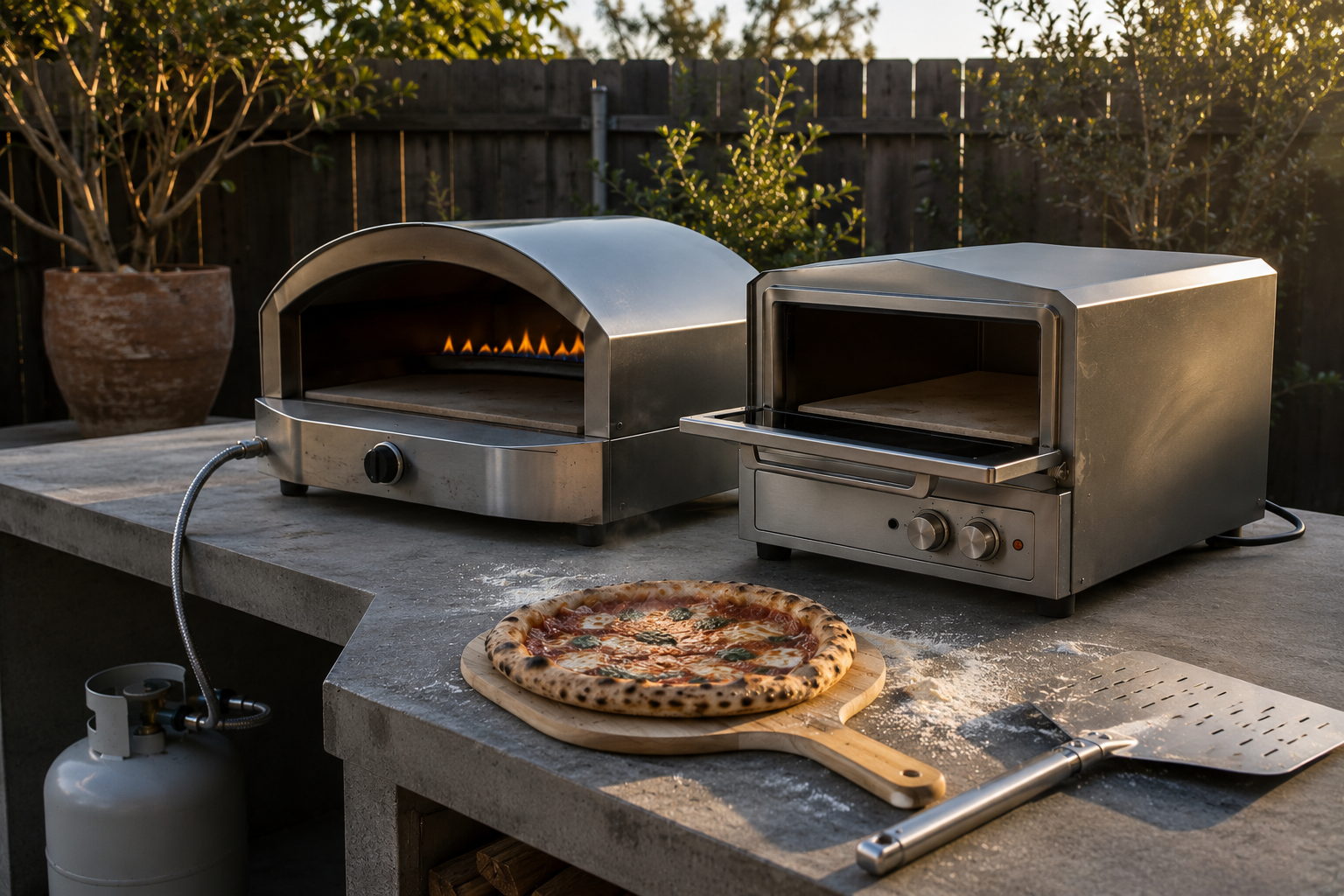
Choosing between a gas or electric pizza oven comes down to how you cook, not just what you can afford. Gas suits buyers who want fast heat-up, high temperatures and hands-on flame control. Electric suits those who want simple, repeatable results. With roughly $1,000 to $1,500 to spend, your available space, access to gas or power, and any balcony or strata restrictions will often matter as much as the oven itself.
Before You Pick a Fuel Type
- Choose gas if rapid heating, high cooking temperatures, portability and a flame-focused cooking experience matter most to you.
- Choose electric if straightforward controls, repeatable results, easier fuel management and suitability for more restricted spaces are the priorities.
- Beginners usually find electric easier to learn on, since the controls are more predictable. Gas rewards cooks who enjoy adjusting the flame and are not put off by a short learning curve.
- Fuel type alone does not decide which oven performs better. Maximum temperature, insulation quality, stone thickness, chamber size, heat recovery and burner or element design all affect the finished pizza just as much as whether the appliance runs on LPG or electricity.
- In this price bracket, the choice of fuel is rarely a budget decision. Comparable gas and electric models often cost the same, so decide how you want to cook and where the oven can safely go, then compare specifications.
- Check what your building allows before you shortlist anything. Open-flame appliances are restricted in some apartment buildings and strata properties, and an electric model still needs a suitable outdoor-rated power supply.
In This Guide
- What are the key differences between gas and electric pizza ovens
- Why choose a gas pizza oven
- What are the benefits of an electric pizza oven
- Which pizza oven is best for your backyard
- How do cooking performance, temperature and flavour compare
- What should you consider about cost, maintenance and installation
- Frequently asked questions
What Are the Key Differences Between Gas and Electric Pizza Ovens?
Both gas and electric pizza ovens can turn out excellent pizza. Where they differ is in how they heat, how they are set up, how portable they are and how much manual adjustment the cooking process demands.
| Comparison Factor | Gas Pizza Oven | Electric Pizza Oven |
|---|---|---|
| Heat source | LPG bottle or approved gas connection | Suitable electrical outlet |
| Ease of use | Simple, but requires flame adjustment | Usually easier for beginners |
| Heat-up time | Fast in most cases | Depends on wattage, insulation and model |
| Temperature control | Manual flame control | Thermostatic or digital |
| Maximum temperature | Often very high | Model-dependent, and capable models reach pizza temperatures |
| Flavour | Can create flame-side charring | Depends heavily on ingredients and high-heat cooking |
| Portability | Often portable with LPG | Limited by suitable power access |
| Maintenance | Gas components require inspection | Lower fuel-system maintenance |
| Installation and setup | Appropriate gas setup and ventilation | Compatible, safely located electrical supply |
| Best suited to | Backyards, patios and flexible outdoor entertaining | Convenience-focused buyers and suitable covered areas |
| Main limitation | Gas storage, flame restrictions and wind | Electrical requirements and weather exposure |
In practice, gas tends to win on heating speed and offers flexible placement when used with a portable LPG setup, provided the manufacturer’s ventilation, clearance and surface requirements are met. Electric wins on control simplicity, provided a suitable power supply and approved placement are available. Neither format guarantees the better pizza, because the individual appliance still matters.
A few things sit underneath that table and shape real-world performance. Insulation quality affects how much heat an oven retains and how much fuel or electricity it uses during a session. The size of the oven opening influences how much heat escapes while you turn or retrieve a pizza. Cooking-floor size, rather than exterior dimensions, determines the usable space available for the pizza, while heat distribution, insulation and burner or element design influence how evenly it cooks. Ventilation clearances and required side or rear gaps can also decide whether a particular model fits a courtyard or alfresco area at all.
If you are still deciding between fuel types more broadly, our guide to pizza oven types covers wood-fired, gas, and electric.
Why Choose a Gas Pizza Oven?
An outdoor gas pizza oven heats its chamber and stone using a controllable flame, generally fed by an LPG bottle or an approved gas supply. It suits buyers who want high-temperature results without the firewood, ash and soot that come with a wood-fired setup.
Advantages
- Rapid preheating, depending on burner output, insulation and oven design
- Strong top heat that helps brown and blister the crust
- Adjustable flame during cooking
- No firewood to source, split or store
- No ash or wood soot to clean up afterwards
- Portable LPG models can be repositioned once cool
- Well suited to cooking several pizzas back to back at a gathering
- A more hands-on, flame-focused cooking experience than electric
Limitations
- Requires safe storage and connection of an LPG bottle, or an approved gas supply
- Open-flame appliances can be restricted in some apartment buildings and strata properties
- Wind can disturb the flame and affect heating
- Hoses, regulators, burners and connections require inspection in line with the manufacturer’s instructions
- Ventilation and manufacturer-specified clearances have to be respected
- Balancing stone heat against chamber heat takes a short learning curve
Gas suits backyard entertainers and home cooks who want rapid, high-temperature cooking with less preparation than a wood-fired oven requires, and who have a suitable location with the clearance and gas access specified by the manufacturer.
A few practical points are worth knowing before your first cook. Pizzas usually still need to be turned partway through, because the heat is strongest closest to the burner rather than being evenly distributed across the chamber. A bigger flame does not automatically mean a better pizza, and excessive heat can scorch the base before the top has finished cooking. A built-in thermometer may measure chamber temperature rather than the stone surface, so its reading can differ from the temperature directly beneath the pizza. Even a portable gas oven still needs a stable, heat-resistant surface that meets the manufacturer’s requirements.
What Are the Benefits of an Electric Pizza Oven?
An outdoor electric pizza oven appeals to buyers who value convenience over hands-on flame control. Instead of managing an LPG bottle and adjusting a burner, you are working with a set temperature and a straightforward control panel.
Benefits
- Straightforward, beginner-friendly operation
- Accurate temperature settings on models offering digital or thermostatic control
- Consistent results across repeated cooking sessions
- No LPG bottle to buy, connect or store
- Less combustion-related cleaning after use
- No flame disruption from wind
- Useful where open-flame appliances face restrictions
- Often a practical fit for compact entertaining areas
There are compromises to weigh up. You need access to a suitable outlet that can handle the appliance’s electrical load, and weather protection is important because these are electrical products operating outdoors. Maximum temperatures vary noticeably across models, and portability is limited when adequate power is unavailable.
Not every electric pizza oven is approved for outdoor use. Check the manufacturer’s placement, electrical and weather-resistance requirements for the specific model you are considering, rather than assuming that “electric” automatically means it is safe for any outdoor spot, enclosed area or indoor setting.
A dedicated pizza setting does not guarantee professional-level temperatures on its own. Power rating, insulation and the position of the heating elements all affect how quickly the oven recovers heat between pizzas. Do not assume an extension lead is suitable for a high-powered cooking appliance. Check the appliance instructions and electrical requirements before use.
Which Pizza Oven Is Best for Your Backyard?
The right pizza oven should work with your broader outdoor living setup and cooking style. Available space, cooking frequency, access to gas or power, and any restrictions on your property can all influence which option is practical.
Buying checklist
- Oven dimensions and stand dimensions
- Preparation area and operating clearances
- Whether the oven is approved for your intended placement
- LPG or electrical access at that location
- Council, strata, lease or building restrictions where relevant
- Whether portability actually matters to you
- Maximum temperature and preheating time
- Cooking-floor dimensions, not just exterior size
- How many pizzas you typically cook per session
- Warranty coverage and replacement-part availability
- Stand, cover, pizza peel, turning peel and infrared thermometer
- Gas bottle, if the model requires one
Recommendations by setting
Open backyard. Gas can provide rapid heating and flexible placement, provided the appliance’s safety requirements are met.
Covered alfresco area. Either fuel type may work, depending on the specific model’s ventilation, clearance, electrical and placement requirements.
Balcony. Electric is often the more practical option where open flames are restricted, but the appliance must be approved for the intended location and building. Strata, lease and electrical requirements still need to be confirmed.
Compact courtyard. Prioritise compact external dimensions, good insulation and clearances that actually fit the space.
Frequent entertaining. Prioritise fast heat recovery, a larger cooking floor and controls that are easy to adjust between pizzas.
Occasional use. Prioritise simple setup, manageable storage and low ongoing maintenance.
It is also worth thinking through where dough, toppings, cooked pizzas and hot tools will sit during a session, since bench space around the oven matters as much as the oven itself. Consider whether the appliance’s weight makes regular repositioning feasible, and where it will be stored and protected from the weather when not in use.
A purpose-designed stand, or another stable heat-resistant surface meeting the manufacturer’s requirements, is more appropriate than ordinary furniture.
These recommendations are starting points rather than fixed rules. The specific appliance and your property’s actual conditions matter more than the general guidance above.
How Do Cooking Performance, Temperature and Flavour Compare?
Both gas and electric ovens can produce excellent pizza when they reach and maintain the temperature required by the chosen pizza style. Fuel type alone does not determine crust quality or flavour.
Cooking performance
Preheating speed, heat recovery between pizzas and consistency all vary by model rather than by fuel type alone. Gas ovens commonly concentrate heat near the burner, which is why rotating the pizza partway through still matters. Electric elements can provide more controlled heat, though performance depends on their placement and the chamber’s insulation.
Cooking several pizzas consecutively tests recovery time more than a single bake does, so compare how quickly a model returns to cooking temperature between pizzas, not just how fast it completes its initial preheat.
Temperature
The advertised maximum temperature is only part of the picture. What matters more is the actual stone temperature when you slide the pizza in, since an under-preheated stone can produce a softer, paler base regardless of chamber temperature.
Recovery between pizzas, the use of an infrared thermometer to check the stone directly, and the demands of high-temperature styles versus lower-temperature home-style pizza all affect which oven is the better fit. The oven with the highest advertised maximum is not automatically the best choice. An overheated stone can burn the base before the toppings have properly cooked.
Flavour
Gas does not inherently give pizza a strong smoky flavour. Flavour and crust character come mainly from dough fermentation, ingredient quality, baking temperature, cooking time, browning, charring and heat distribution.
Gas can produce distinctive flame-side charring on the crust edge, while a capable electric oven can still deliver good blistering, browning and a crisp base. Neither fuel type automatically produces better-tasting pizza.
If straightforward temperature control and repeatability are your priorities, a well-designed electric model offers a gentler learning curve. Gas suits cooks who value rapid heating and direct flame control, and who are comfortable rotating pizzas and adjusting the burner during a session.
What Should You Consider About Cost, Maintenance and Installation?
Comparing pizza ovens on purchase price alone misses a big part of the picture. Total cost of ownership includes fuel or electricity, accessories, and the maintenance needed to keep the appliance safe and performing well.
Purchase and operating costs
Comparable gas and electric models frequently sit at the same price, so within a given range, the fuel type is a decision about how you want to cook rather than what you can afford.
For buyers working with roughly $1,000 to $1,500, budget for more than the oven itself: LPG bottle purchase, exchange or refill costs for gas models, any electrical setup requirements for electric models, a stand if one is not included, a cover, pizza tools, an infrared thermometer, and ongoing fuel or electricity use. Spending the full amount on the appliance and nothing on the surrounding setup is the most common way this budget goes wrong.
There is no universal answer on whether gas or electricity is cheaper to run. Operating costs depend on the appliance’s efficiency, the cooking temperature you aim for, how long you preheat, how many pizzas you cook per session, heat retention, and current local gas or electricity prices. Rather than assuming one fuel type is always cheaper, weigh up how often you will actually use the oven and how that matches the total setup and running costs.
Maintenance
Gas ovens need their burners, hoses, regulators and connections inspected in line with the manufacturer’s instructions, and replaced if damaged, deteriorated or otherwise unsuitable for use.
Electric ovens require less fuel-system upkeep but still need attention to cleaning, the condition of the cord and plug, the manufacturer’s maintenance instructions, and protection from the weather.
Both types benefit from the same pizza-stone care. Heat and cool the stone gradually to reduce the risk of thermal shock, store the oven safely, keep it dry as the manufacturer specifies, and consider the availability of replacement parts before you buy, since it affects how long the appliance remains practical to own.
Installation and safety
Follow the manufacturer’s instructions closely, and only operate an outdoor-only model outdoors. Place the oven on a stable, heat-resistant surface, ensure adequate ventilation, and keep children and pets away while the appliance is hot. Never leave an operating oven unattended, and do not try to move it while it is hot or in use.
For electric models, confirm the power supply is suitable for the appliance and the intended outdoor conditions. Keep electrical equipment protected from weather and water, and do not assume an extension lead or multi-board arrangement is appropriate for a high-powered cooking appliance. The NSW Government’s guidance on avoiding electrical accidents covers the use of appliances and cords outdoors. Requirements vary between states and territories, so also check the relevant electrical safety authority in your location.
For gas models, follow the manufacturer’s instructions for connection, inspection, ventilation and safe use. Gas appliances require adequate ventilation, particularly near covered or partially enclosed entertaining areas. Western Australia’s Building and Energy gas safety guidance is the clearest published explanation of what counts as a safe location, setting out that an outdoor gas appliance needs either four open sides with a roof above, or four enclosed walls with no roof, and that a balcony or veranda qualifies only where at least 20 per cent of the wall area stays permanently open. Café blinds need to be up. Always check the requirements that apply to your specific appliance and your own state or territory.
Keep combustible furniture, walls, roofing, and decorations outside the clearances specified by the manufacturer. Confirm your property’s rules before installing anything permanent, and check current fire restrictions before using an outdoor cooking appliance. Fire restrictions and Total Fire Ban conditions are set by each state or territory fire authority, so check your local service’s current requirements before cooking.
Frequently Asked Questions
Is a gas or electric pizza oven better for beginners?
Electric is generally easier for beginners, because it offers straightforward, repeatable temperature control rather than requiring you to read and adjust a flame. Controls and ease of use still vary by model, and some electric ovens are more basic than others. Gas can be a good choice for a first-time buyer who is comfortable with a short learning curve and wants a more hands-on cooking experience from day one.
Which type of pizza oven heats up faster?
Gas ovens commonly heat up quickly thanks to direct-flame heating, but actual preheating time depends on burner output, insulation quality, stone thickness and chamber design. Heat-up times vary by fuel type, so compare the manufacturer’s specifications for individual models rather than assuming gas will always heat up faster.
Do gas pizza ovens produce better-tasting pizza?
Not automatically. Flavour comes mainly from dough fermentation, ingredient quality, cooking temperature, cooking time, browning and heat distribution, not from the fuel source itself. Gas can add flame-side charring to the crust edge, but a capable electric oven still produces good blistering, browning and a crisp base. Fuel type is one of several factors, not the deciding one.
Can an electric pizza oven be used outdoors?
Only if the manufacturer approves that specific model for the intended outdoor placement. Not every electric pizza oven is designed for outdoor exposure, so check the manufacturer’s placement guidance, weather-resistance information and power requirements before installing one outside, rather than assuming “electric” automatically means outdoor-ready.
Which pizza oven is more affordable to operate?
There is no universal winner. Operating costs depend on the appliance’s efficiency, how long you preheat, how long each session runs, energy consumption, and current local LPG or electricity prices. Rather than assuming one fuel type is always cheaper, compare how you would actually use the oven against its efficiency and your local energy costs.
Is gas or electric more expensive to buy?
Not necessarily. Within the same range and cooking-floor size, comparable gas and electric models often cost the same, so the fuel choice usually comes down to how you want to cook and where the oven can safely sit rather than what it costs.
Ready to Fire Up Your First Pizza?
Settle three things before you shortlist anything: where the oven will physically sit, whether that spot has gas or power and the clearances the manufacturer requires, and whether your building or strata permits an open flame there. Those three answers usually narrow the choice to one fuel type on their own.
From there, compare outdoor pizza ovens by cooking area, maximum temperature and heat-up time, and check the model-specific placement and setup requirements before you buy. If you are unsure whether a particular oven will work safely in the space you have in mind, get in touch and we will talk through clearances, ventilation and placement for your setup.